
Getting Fayette County Court Records
Start with Indiana MyCase. The free public search can locate Odyssey cases from Fayette Circuit Court and Fayette Superior Court. It may show the CCS and selected public documents, but its own notice says the online view is not the official court record. When an event lacks a PDF, an older case does not appear, or an authenticated copy is needed, contact the Fayette County Clerk. The clerk is the unified filing and records office for both local trial courts.
In-person access is confirmed at the clerk counter on the second-floor north end of the Fayette County Courthouse. Phone, fax, and email are useful for asking whether a request method is accepted, but the county does not promise that email or fax alone completes an order. No local mail form, drop-box process, public-terminal inventory, or fixed turnaround was found. Call before sending money or private data.
- Find the court, cause number, event date, and document name in MyCase.
- Choose a CCS, filed document, judgment, certified copy, or hearing transcript.
- Call 765-825-1813 before mailing, faxing, or emailing a request.
- Give the exact case number, date range, format, delivery choice, and certification need.
- Ask for a fee quote, payment directions, identification rule, and expected completion time.
Fayette CCS and Filed Documents
A CCS is the running index of case events. A filed document is the complaint, motion, summons, affidavit, order, or judgment behind one event. A certified copy is a clerk-authenticated reproduction meant for an official recipient. These are not interchangeable products. MyCase may reveal the CCS while withholding the linked document under its case-type and audience matrix.
The public document access matrix explains why a visible event does not always carry a downloadable file. Public access varies by case category and document type. Repeated searching will not unlock a document that is unavailable to the public online. Ask the clerk whether a public copy exists and what request process applies.
Indiana's official court statistics tool also illustrates the difference between aggregate court data and a specific case file.
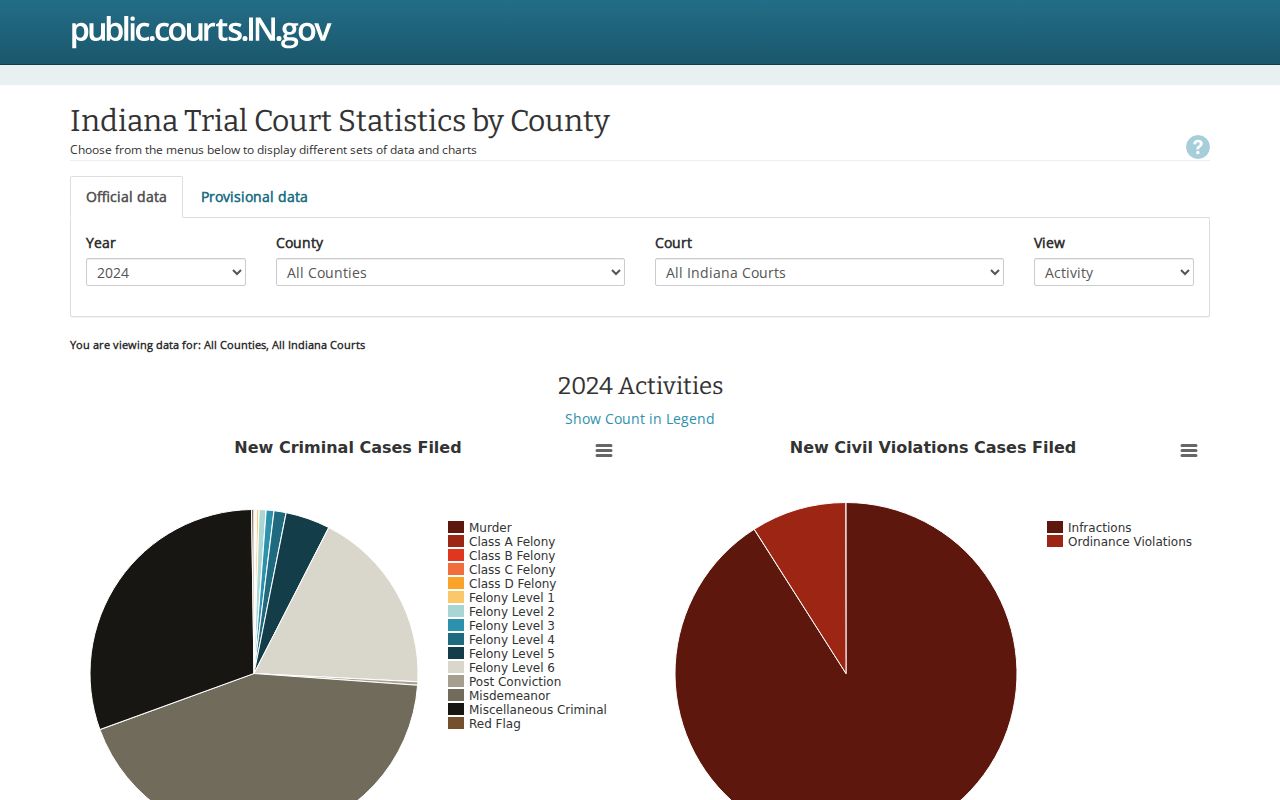
The statistics screen counts court activity, while MyCase and the clerk supply record-level detail.
Fayette County Court Record Types
Fayette Circuit Court handles felony, juvenile, probate, and general civil matters. Fayette Superior Court handles misdemeanor, traffic-related felony, traffic, ordinance, small-claims, eviction, and general civil matters. The same clerk serves both. The filing court, not just a party name, narrows the request.
- Chronological Case Summaries and hearing entries
- Complaints, motions, summonses, affidavits, and appearances
- Orders, judgments, dispositions, and judgment transcripts
- Public criminal, civil, probate, small-claims, traffic, and ordinance files
- Certified copies and court-reporter transcripts
Fayette Clerk Counter Access
The Fayette County Clerk is at 401 N Central Ave, second floor north end, Connersville, IN 47331. Published hours are weekdays from 8:00 a.m. to 4:00 p.m., Wednesday until 5:00 p.m., and Thursday until 12:30 p.m. The office closes from noon to 1:00 p.m. each day. Call before a trip because court and clerk schedules differ.
Fayette County Clerk
401 N Central Ave, 2nd Floor North End
Connersville, IN 47331
765-825-1813
The office also publishes fax 765-827-4902 and clerk@co.fayette.in.us. Ask first whether either channel is accepted for the particular record and how payment must be made.
Inside a Fayette County Court Record
A Fayette CCS has a header, parties and attorneys, a chronological event list, hearing details, and sometimes financial or disposition data. The cause number begins with county code 21, then C01 for Circuit or D01 for Superior. Event descriptions control. A short system code should never be read alone as the final outcome.
| Case Number | 21C01-YYMM-F5-###### or 21D01-YYMM-CC-###### |
|---|---|
| Header | Court, filing date, case type, status, and caption |
| Events | Date, description, comment, judge, and any public document link |
| Hearings | Session date and time, setting text, result, cancellation, and judicial officer |
| Financials | Limited charges, credits, payments, balance, and transaction descriptions when shown |
Fayette Transcripts and Exhibits
A hearing transcript does not follow the ordinary clerk-copy route. Indiana Trial Rule 74 sends transcript or recording requests to the court reporter or designee. Give the hearing date, judge, and case number, then ask whether audio exists, whether a transcript has already been filed, and what rate and redaction terms apply.
The official transcript rule identifies the reporter channel. This separation matters because the clerk can identify the file, but the reporter prepares the requested transcript. Fayette local rules also place admitted exhibits with the reporter and set removal periods after disposition or appeal.
Fayette Court Copy Fees
A plain copy reproduces a public page. Certification adds the clerk's authentication. Ask the recipient which product it requires before ordering. The state clerk guide supplies statutory baselines, while no Fayette-specific certified-copy schedule or general local order form was located.
| Item | Amount |
|---|---|
| Plain legal or letter page | $1 state baseline, confirm locally |
| Certificate under seal | $1 state baseline |
| Transcript of judgment | $3 state baseline |
| Hearing transcript | Reporter sets current rate |
Fayette Records Without a Local Form
No general Fayette copy-request form was found. That gap makes a pre-request call important. Identify an existing record with reasonable particularity: state the court, cause number, event or document name, date range, requested format, number of copies, and whether certification is needed. Do not send an open-ended request for new legal analysis.
The clerk's PayGov page is a payment page, not a searchable docket or document-order form. It adds a nonrefundable convenience fee, but the amount was not visible before entry. Use it only after the clerk identifies the charge and confirms the payment route. For older files or converted events, ask where the paper or archived record is held and how long retrieval may take.
Fayette Copy Rules in Practice
Indiana publishes separate official references for fees, clerk duties, and access. The trial-court fee page is a starting point for current statewide material.
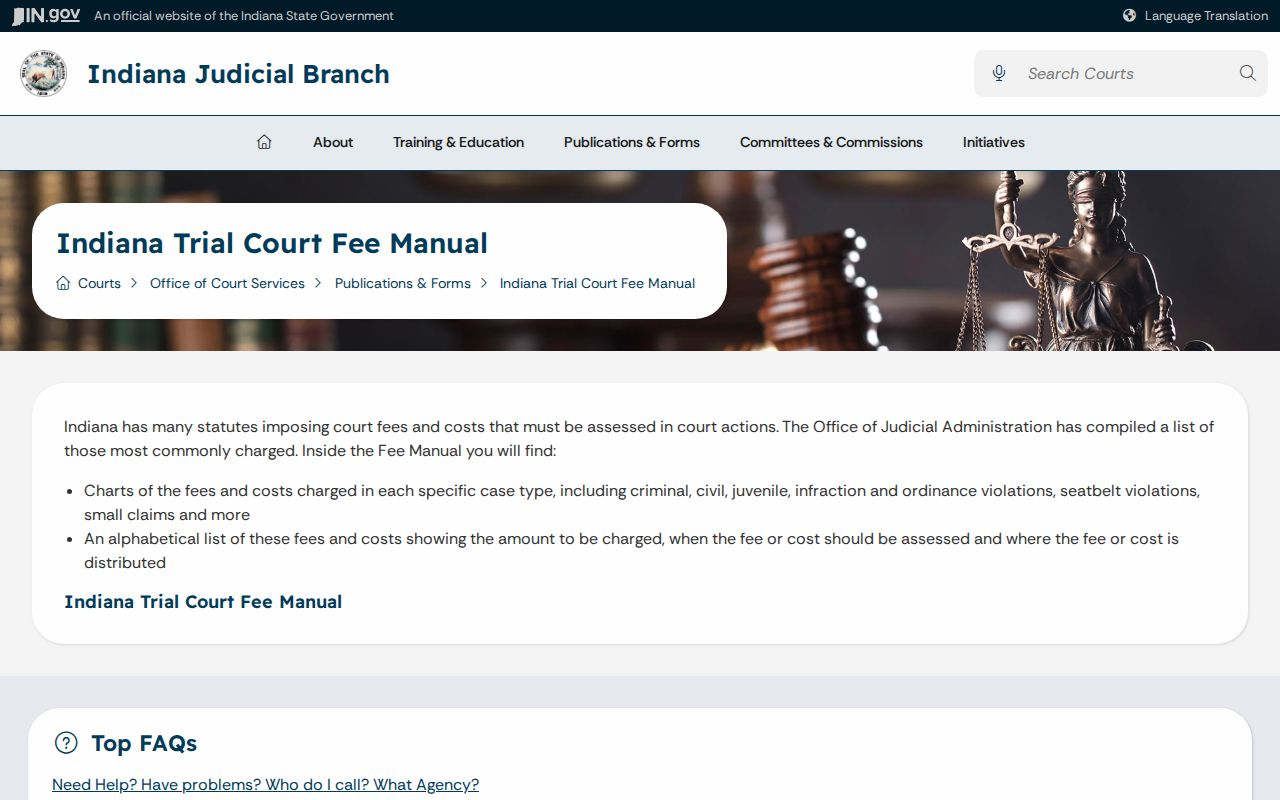
It does not replace a quote from the Fayette clerk for the exact copy product. The state clerk guide gives the statutory copy and certification baselines.
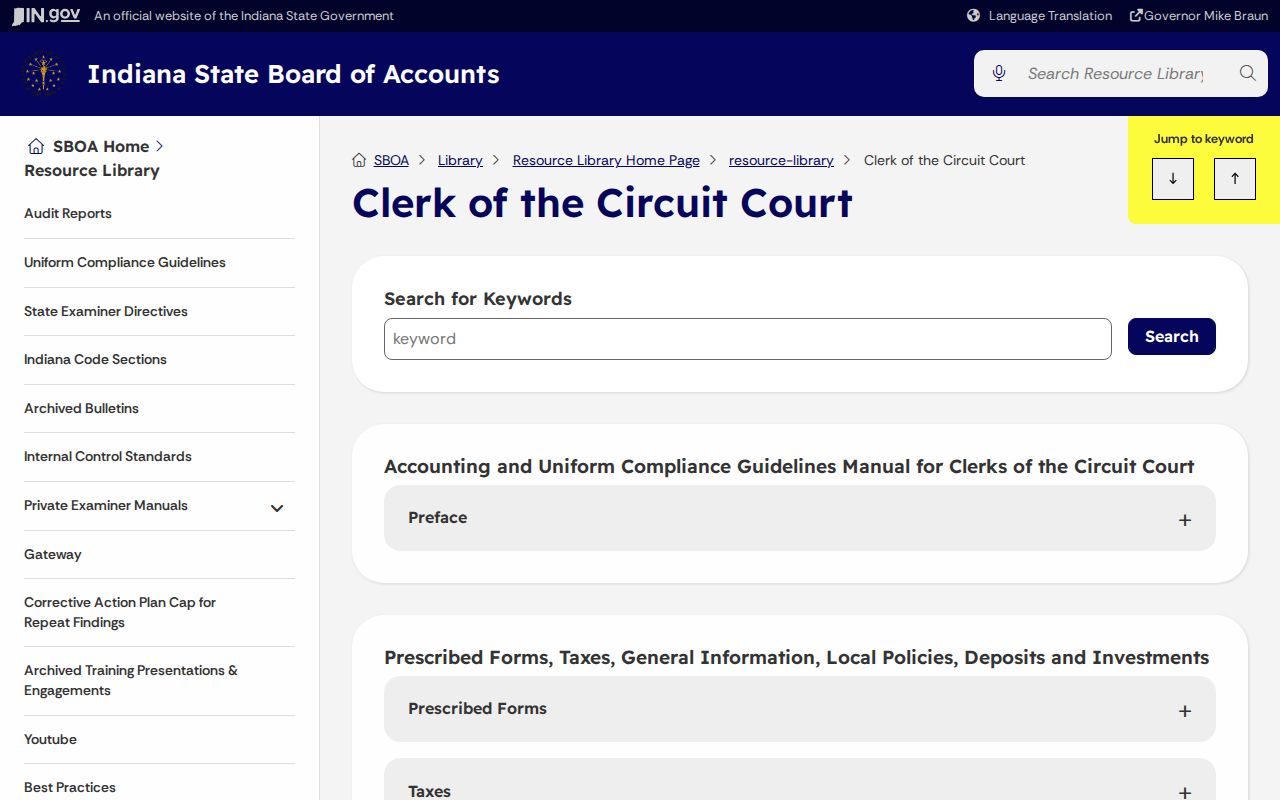
Fayette County requesters should still confirm page count, certification, delivery, and payment before ordering. Finally, Access Rule 4 states the public-access baseline.
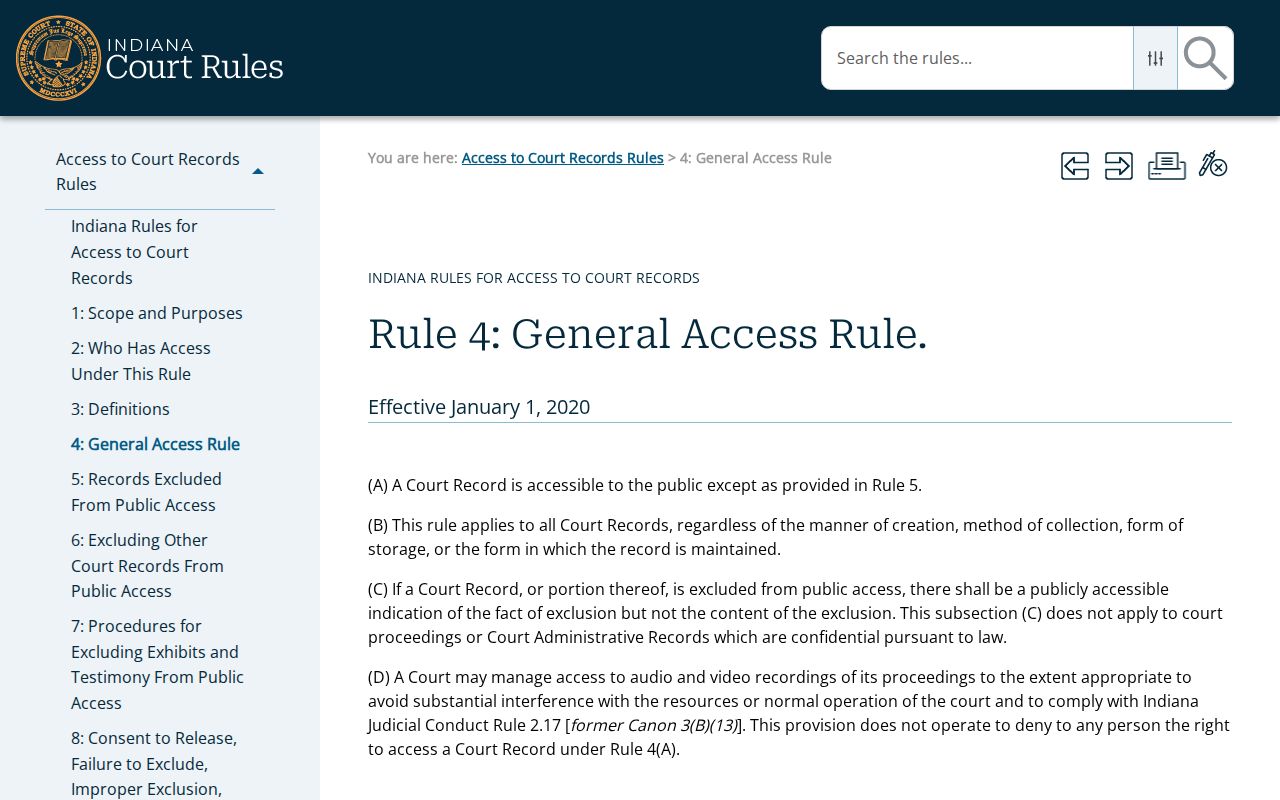
Together, these sources explain why locating a public CCS, obtaining a clerk copy, and gaining access to a restricted item are three different tasks.
Sealed Records and Fayette Access
Indiana Rule on Access to Court Records 4 starts with a general right to inspect and copy court records. Rule 5 excludes specified material, including categories whose disclosure would conflict with law or court rule. Rule 6 permits a court to exclude other records after required findings. Rule 9 provides the procedure for seeking access to excluded material. Indiana's Access to Public Records Act also governs requests for existing public records, but it does not override a court-record restriction.
The current Indiana access rules should be checked because amendments took effect in 2026.
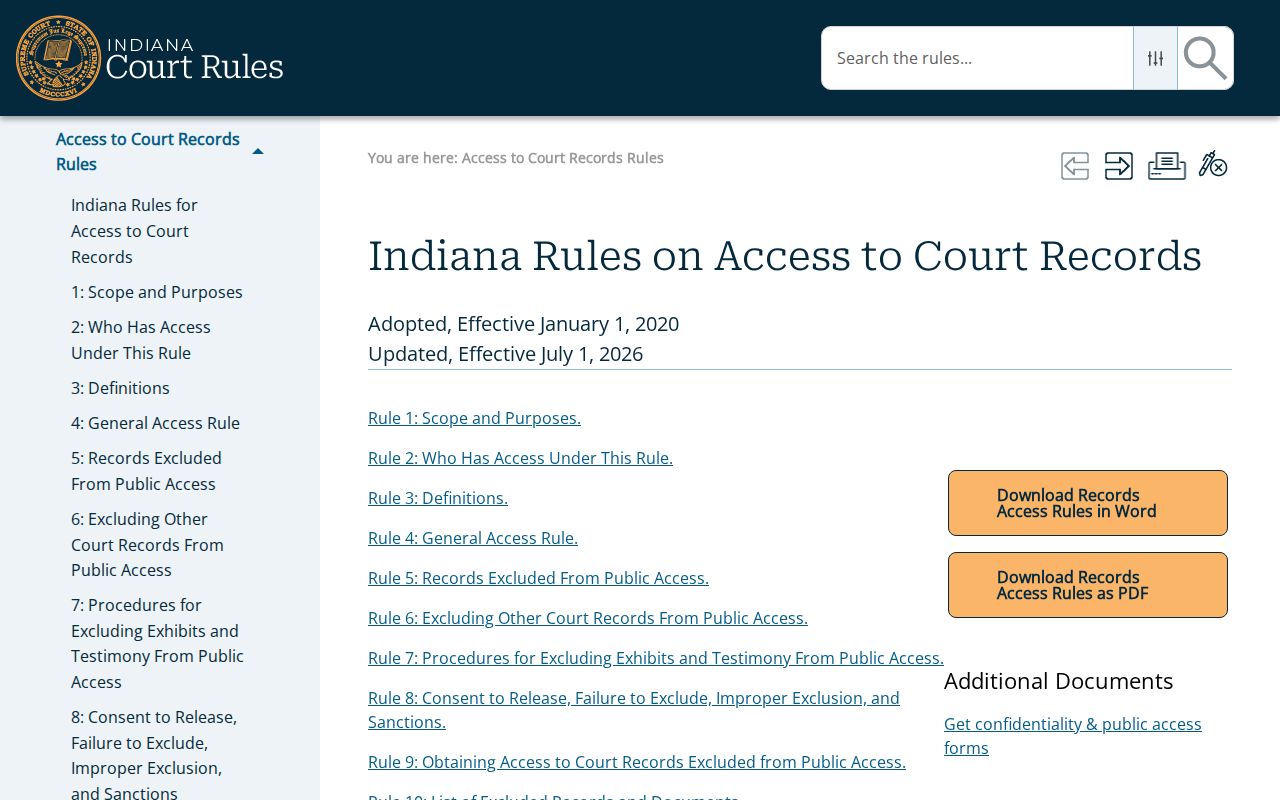
The rules page is the right starting point for sealed, juvenile, expunged, protection-order, or confidential-identifier questions.
Key Rules:
Access Rule 4 states the general access principle.
Access Rule 5 lists records excluded from public access.
Access Rule 9 supplies the request process for excluded records.