
Fayette County Court Calendars Explained
Fayette County posts no confirmed daily docket. No weekly calendar or attorney calendar appears on the official county website either. For a case you already know about, the hearing block is the public source for settings. It sits inside an Indiana MyCase case summary. Search for the case first. Then check that the result belongs to Fayette Circuit Court or Fayette Superior Court. After that, read the sessions. Then read the nearby Chronological Case Summary entries. MyCase works well as a case calendar. It cannot list every matter set in Fayette County on one date.
The court named in the case header tells you who can confirm the setting. Fayette Circuit Court handles felony, juvenile, probate, and general civil matters. Fayette Superior Court handles misdemeanor, traffic, ordinance, small-claims, eviction, traffic-related felony, and general civil matters. Both sit on the second floor. The courthouse is at 401 N Central Avenue in Connersville. Sharing a building does not merge their calendars. The case number and court name remain the best routing facts.
Fayette County MyCase Calendar Limits
A broad MyCase query is not Fayette County's full calendar for a day. The public search starts with a case number, citation number, cross-reference number, party name, business name, or attorney. Its date filter concerns the file date. It does not filter by next hearing date. That distinction trips people up. Anyone who enters a date may expect a list of that day's hearings.
Known cases work best. Find the case first, open its summary, and use the newest noncancelled session as the online starting point.
The MyCase search screen lays out the exact controls that lead to a hearing record. The official search template shows how those inputs are presented.
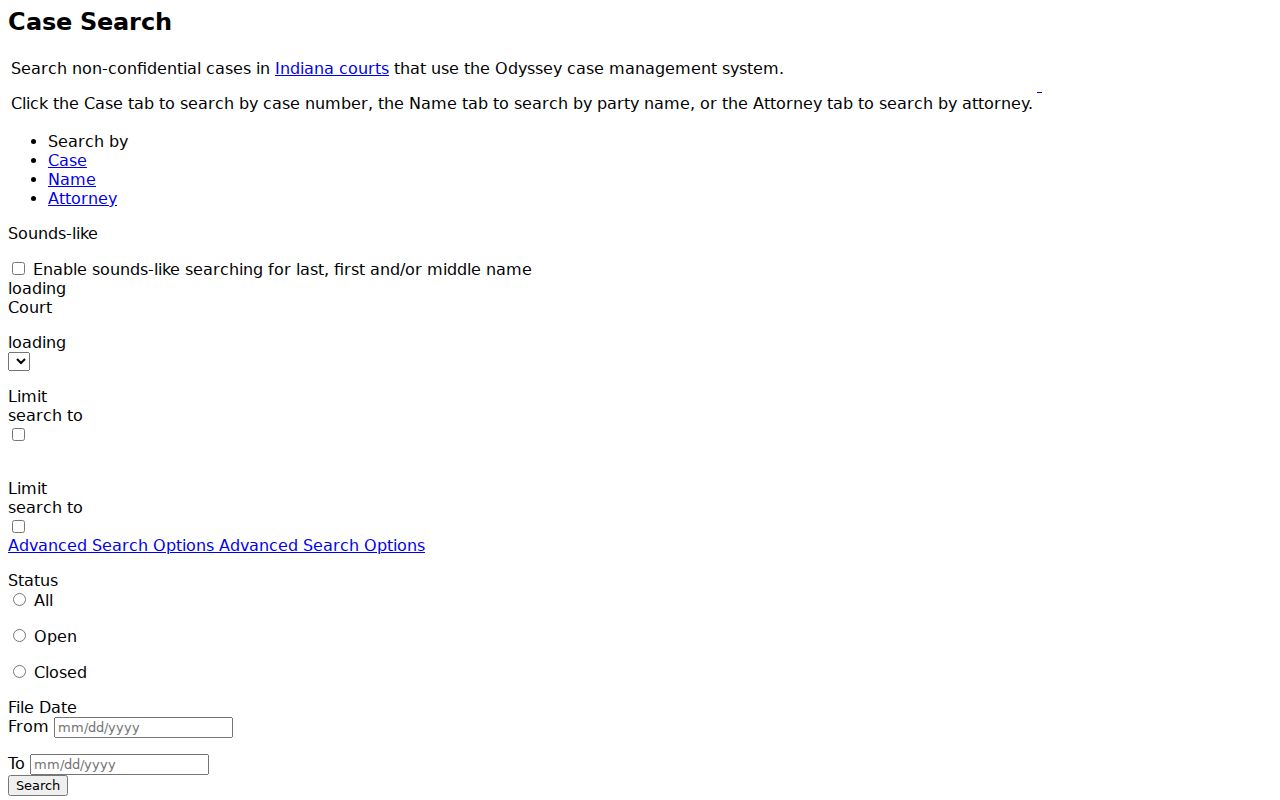
Those fields help you locate the case. The session date and time appear only after the correct case summary is opened.
Finding Your Court Date
Use the exact cause number when you have it. A name search can return several people or matters. The case number points to one record. Check the court, file date, case type, status, and caption. Do this before relying on a hearing entry. Then use every channel that fits how urgent the setting is.
- Open MyCase and search by the exact case number, citation number, cross-reference number, or a carefully entered name.
- Filter to Fayette County or to Fayette Circuit Court or Fayette Superior Court when the owning court is known.
- Open the matching summary and find the hearing or session block. Note the date, time, court, setting label, judicial officer, result, and cancellation text.
- Read the newest CCS entries around the hearing for a continuance, order, scheduling activity, or later session.
- Call Fayette Circuit Court at 765-825-1331 for its settings or Fayette Superior Court at 765-825-1775 for its settings when attendance or a recent change is at issue.
- For an older or missing record, ask the Fayette County Clerk at the second-floor north-end counter whether paper or terminal information is available. Call first because no public-terminal inventory or posted-calendar promise was found.
- Ask counsel for confirmation when represented. An attorney may have received an order or notice that has not yet become clear in the public view.
Fayette County offers no text reminders, email reminders, a remote-hearing calendar, a daily PDF, or a public Zoom link. Do not assume one exists. For the broader lookup path, the Fayette County case lookup explains the portal's case, name, and attorney modes.
Fayette County Setting Confirmation
The clerk and the court offices do related but different jobs. The unified Fayette County Clerk keeps filings and case records. It serves both trial courts. A court office controls and confirms its own setting. The clerk can help identify a file or point to a case record. But a same-day reset needs the court itself. An unclear session should also go to the court named on the case.
| Channel | Best use | Local detail |
|---|---|---|
| MyCase | Known-case online setting | Read the hearing block and nearby CCS events. |
| Circuit Court office | Felony, juvenile, probate, and Circuit civil settings | 765-825-1331; ciradmin@co.fayette.in.us |
| Superior Court office | Misdemeanor, traffic, ordinance, small-claims, eviction, and Superior civil settings | 765-825-1775; superiorsec@co.fayette.in.us |
| Clerk counter | Case files and older or missing case information | Second floor, north end of the courthouse |
The county's payment agency view also names the Fayette clerk as a distinct transaction point. The official Fayette Clerk payment page supplies that context.
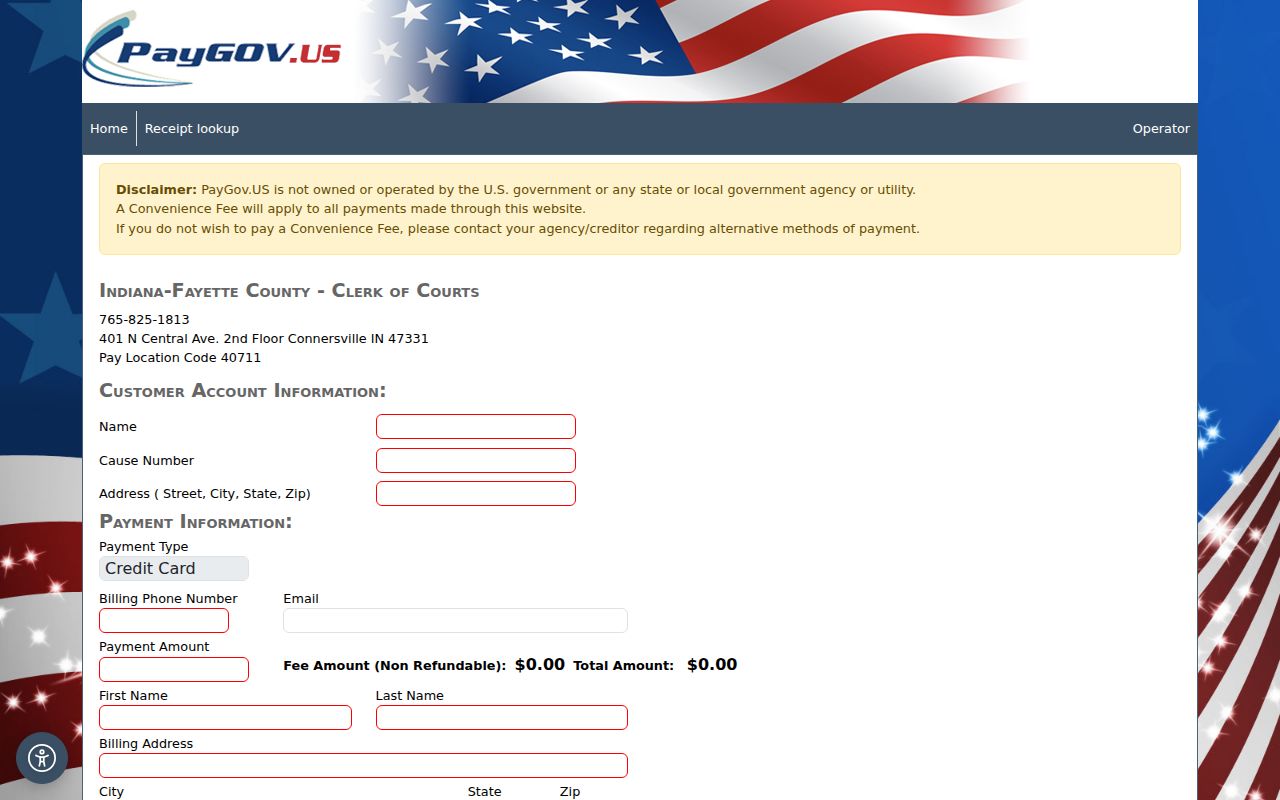
A payment screen does not prove a hearing was removed. The court office remains the source for any live setting question.
How to Read a Court Setting
A MyCase hearing entry can hold several facts, and some fields may be blank. Record the full set. Copying only a date is not enough. A Fayette hearing entry can include court name, session date, session time, hearing text, judicial officer, cancellation status, result, comment, and display text. The related event can also show an event date. It can list event time, description, judge, and a document link.
| Date | The session date for that hearing entry. Check for a later session or order. |
|---|---|
| Time | The listed session time. Confirm it with the owning court if the appearance is near. |
| Courtroom | A room may appear in display text, but a room field is not promised in each public summary. |
| Judge | The judicial officer attached to the setting when populated. |
| Setting Type | The hearing label, such as Initial Hearing, Pretrial Conference, or Jury Trial. |
| Status or Result | Cancellation, result, comment, or related text that explains whether the session remains current. |
A setting label names the scheduled event. It does not give the result of the whole case. A pretrial conference is not a trial. An initial hearing is not a final disposition. A hearing date marked to be determined is not a date on which to appear.
Fayette County Hearing Labels
Three labels common in Fayette County dockets show why the event type matters. An Initial Hearing is an early court appearance. A Pretrial Conference is a case-management setting before a possible trial. A Jury Trial is the scheduled trial setting. Its position and later orders still matter. Hearing Scheduling Activity signals calendar work in the CCS. It may not itself give a firm appearance date.
- Chronological Case Summary
- The dated register of events, filings, orders, and settings, often shortened to CCS.
- Session
- The date-and-time portion of a hearing record.
- Assigned in error
- A cancellation explanation showing that an earlier assignment should not be treated as current.
- Date to be determined
- A placeholder indicating that no firm date has yet been set.
Read the label together with its status. A historical session can stay visible after a later reset, and the last noncancelled session is usually the best online lead.
Continuances, Resets, and Cancellations
A continuance pushes a proceeding to a later time. A reset puts the same step, or the next one, back on the calendar. A cancellation wipes a session off the list. None of these dismiss the case. Fayette's local rules expect every case to carry a next setting. That is why a CCS may show an old date plus later scheduling activity.
Read forward from the old session. A motion, order, appearance, or continuance entry usually explains the change. So do not stop at the first date you see. One cancellation in the data was assigned in error. One hearing date was still to be determined. Treat both as history rather than a command to appear. If the newest docket text conflicts or stays vague, call the court that owns the case.
Fayette County Jury Date Rules
The Fayette County local rules give planning context, not a live calendar. Jury trials generally land on Mondays. A case sitting in a second or later trial position must be ready with fourteen days' notice. That holds unless the court grants relief. Motions or pleadings needing action should, when practical, be set within sixty days. A waiver can come only from the court.
Treat these as scheduling habits, not promises. A party still needs the current case setting. The local rules explain why a docket shows a next step, trial position, or motion hearing. MyCase and the court office hold the case-specific facts.
Fayette County Has No City Calendar
The official Odyssey court list shows no separate Fayette municipal, city, town, or justice-of-the-peace court. So do not mistake Connersville's ordinance-enforcement work for a city court calendar. Ordinance matters the county identifies go through Fayette Superior Court, which also takes traffic cases. The official Connersville ordinance-enforcement page lays out the city's enforcement channel. It posts no municipal docket of its own.
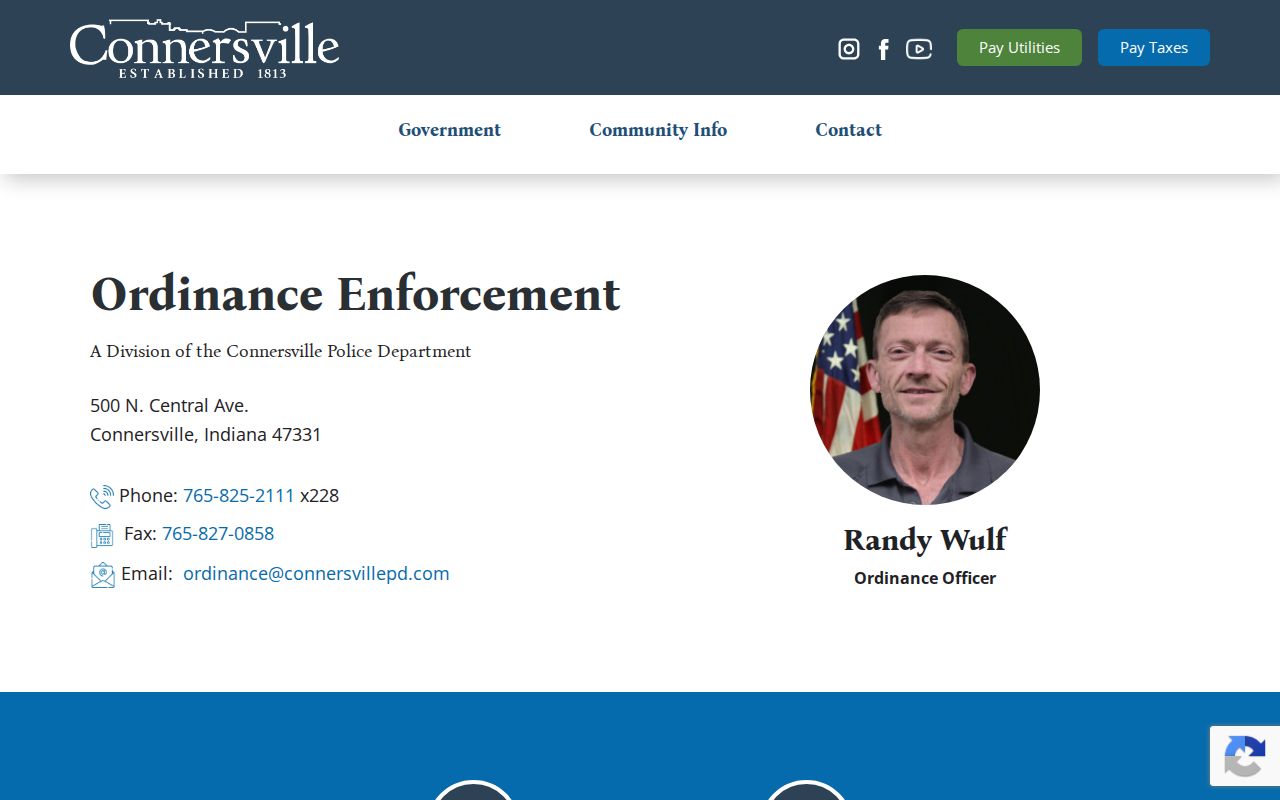
For a Connersville ordinance case, search under the Fayette Superior Court label and its MyCase hearing record. Skip the hunt for an unverified city calendar.
If You Miss a Court Setting
Act fast. Open the case summary. Note the cause number and owning court. Then read any entry filed after the missed time. From there, contact the court office, plus counsel if you have one. Ask what the record now shows and what formal step comes next. A new date will not appear on its own. An online payment does not fix a missed appearance.
Missed a setting? A missed date can produce serious case consequences, and the exact result depends on the case and the court's order.
Call the Fayette court named in the case summary at once and give the exact case number.
Seek advice from a licensed attorney when a warrant, bond issue, default, or other court action may be involved.
The public case summary informs; it does not govern. A blank or slow public view does not erase a duty set by an order or notice. The Fayette court that issued the case controls what happens next.