
Searching Fayette County Civil Dockets
Start with Indiana MyCase, the free public route to Fayette Circuit and Superior case summaries. Case search fits a cause or cross-reference number. Name search fits a person or business. Pick Fayette County. Then narrow to Civil, Family, or Probate, and use the status and file-date filters to cut down broad results. Before trusting a match, confirm the cause number and court. Also check file date, type, status, and party role.
MyCase is not the official record, though. A CCS event can appear with no public PDF behind it. An online balance may lag. When a Fayette filing seems absent, call the owning court and ask the unified clerk about inspecting the paper file or a terminal, getting a plain copy, or ordering certification.
- Choose Case or Name search.
- Limit results to Fayette County.
- Select Civil, Family, or Probate.
- Match party role, court code, and date.
- Read events and judgment in sequence.
- Request official records from the clerk.
Fayette Civil Docket Technology
Fayette Circuit and Superior joined Indiana Odyssey on October 14, 2014. Odyssey is the case-management system behind MyCase. Material older than that migration may still show up as converted events, but the date alone does not put every older document online. Treat a converted entry as a data marker, not as a new judgment or hearing. The official Odyssey technology page explains the system in the court's own words.
This explains why a Fayette chronology may combine current electronic filings with converted history.
Inside a Fayette Civil Docket
A Fayette civil CCS has a header, parties and attorneys, dated events, hearing information, documents, and financial fields when the court supplies them. In the Superior collection sample, the docket ran from complaint to e-filed appearance to summons, plus a Notice of Exclusion of Confidential Information and appearance activity. Linked matters may sit in related containers the docket connects.
| Header | Cause number, court, file date, type, status, caption, and flags. |
|---|---|
| Parties | Roles, attorneys, and public-view limits. |
| Filings | Complaint, summons, appearance, motion, notice, and order. |
| Hearings | Date, time, court, setting, result, and cancellation. |
| Financials | Charges, credits, payments, balance, and as-of date. |
| Outcome | Judgment, dismissal, default, garnishment, or later action. |
A safe collection pattern is 21D01-YYMM-CC-######. Read the full event and the signed order, because a short code alone is not a judgment.
Fayette Complaint and Appearance Sequence
Civil chronology usually opens with a complaint or petition. Summons and service come next. Then an appearance or answer, followed by motions, discovery, notices, settings, and orders that push the file toward judgment or dismissal. After judgment, watch for garnishment or a judgment transcript. The sample used PCO for complaint, SSF for summons, APP for appearance, and NECI for a confidential-information notice.
Those codes are inventory labels, not a local codebook. A NECI event does not mean the lawsuit vanished. It records an exclusion notice, and whether each document is open remains a separate question. A party name alone proves nothing about the outcome either. Check the role and follow the events through the signed result.
Civil Case Types on the Docket
Both Fayette trial courts hold general civil jurisdiction. Official statistics list collections, small claims, eviction, family, estates, guardianships, protective orders, tax, foreclosure, tort, and miscellaneous categories. No separate municipal or justice docket exists in the official list, so rely on the case header.
| Type | Fayette route | Common entries |
|---|---|---|
| General civil or collection | Circuit or Superior | Complaint, summons, motion, judgment |
| Small claims or eviction | Superior categories | Claim, service, setting, judgment |
| Family or probate | Often Circuit | Petition, notice, hearing, order |
| Foreclosure, tort, tax | Court shown in MyCase | Complaint, answer, motions, disposition |
When you call or mail a request, cite court code 21C01 for Circuit Court and 21D01 for Superior Court.
Fayette Civil Filing Context
The official 2024 reports show 460 Circuit civil filings and 1,122 Superior civil filings. Categories differ, and totals are not outcomes. They simply show why filters matter.
The annual source appears below.
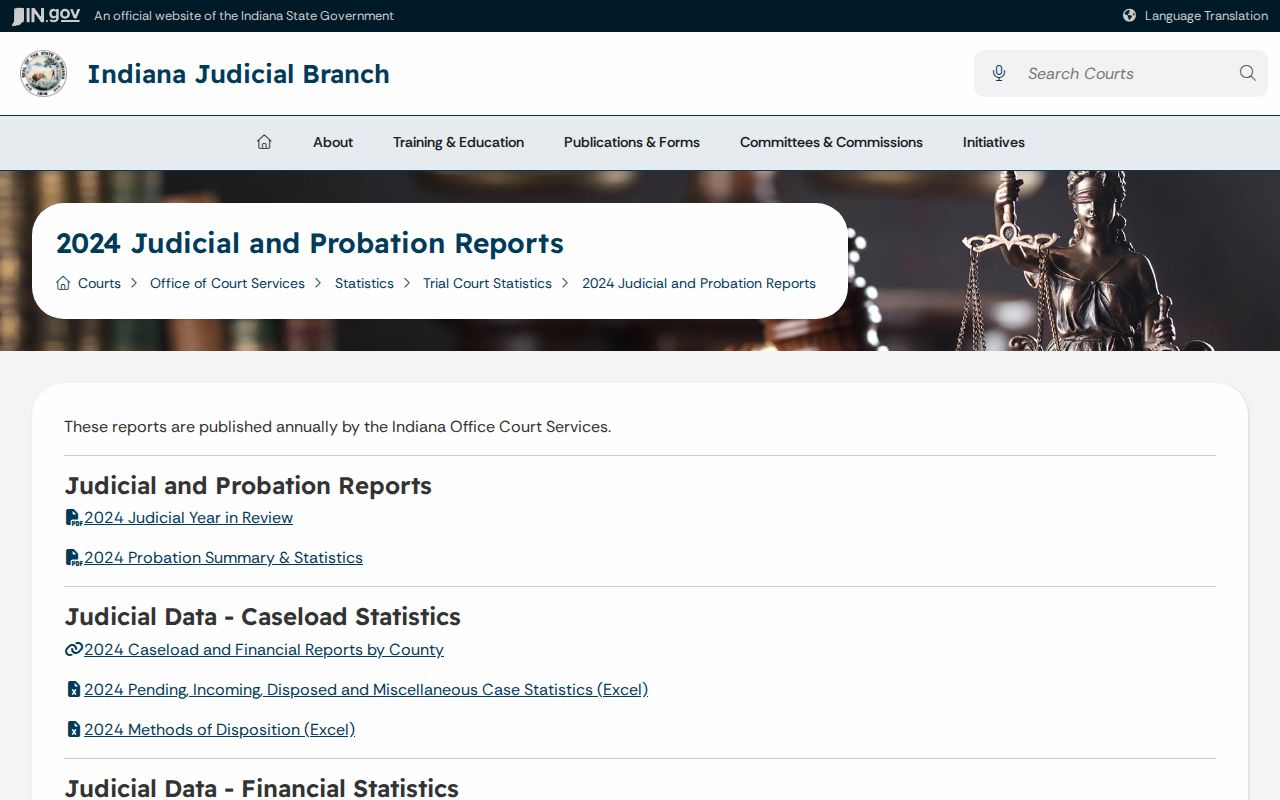
Use the selected court, year, and chart definition.
The statistics index supplies the series.
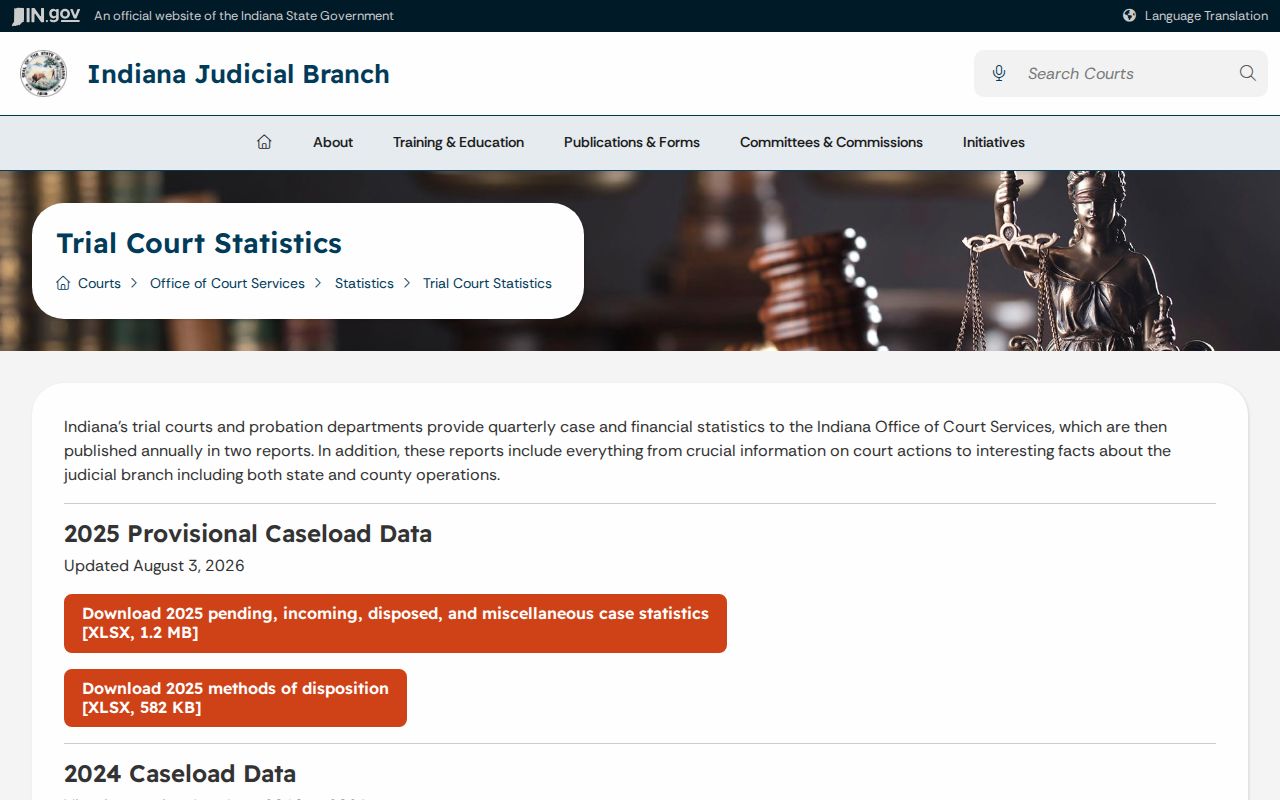
Do not mix provisional and final reports.
Civil Docket Settings and Hearings
A Fayette hearing block lists court, date, time, and setting text. It also lists officer, result, comment, and cancellation status. Always read the nearby events. A continuance or later order can replace an earlier date, and a canceled setting is not current.
Local rules direct that a case be set for its next step. It may also be reset for the same step. A motion needing court action should generally be set within sixty days where practical. That applies unless waived and approved. The deadline is not a promise of a decision inside sixty days. For confirmation, call Circuit settings at 765-825-1331 and Superior settings at 765-825-1775. The clerk identifies the file; the court confirms the setting.
Fayette Civil E-Filing Route
Indiana e-filing feeds documents into Odyssey, but it is not the public search. Filers work through the filing network. The public uses MyCase and the clerk. An e-filed appearance can show in the CCS. Its PDF may stay closed to most users. The Indiana e-filing guidance spells out how the system works.
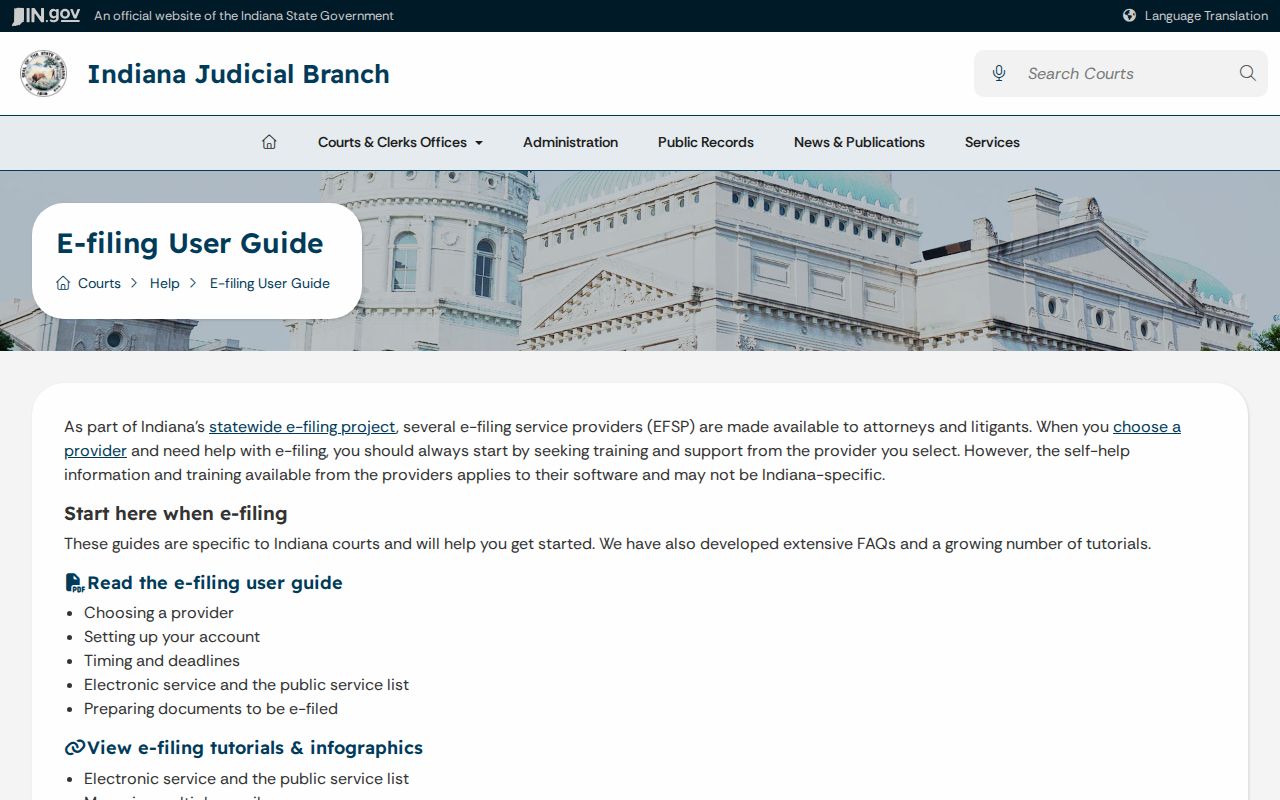
This keeps filing submission, public information, and official records in their proper roles.
Civil Docket Access Rules
Indiana Rule 4 starts from public access unless another rule or law excludes the record. Rule 5 shields specified cases, records, and identifiers. Rule 6 allows exclusion by court order. Family, protection-order, adoption, paternity, juvenile, mental-health, and confidential participant information may all be restricted. Even so, a missing PDF does not prove the case is sealed.
Rule 4 states general access.
Rule 5 identifies exclusions.
Rule 6 governs added exclusion.
Indiana Code 5-14-3 supplies the broader request framework.
The state request route appears below.
It directs local case records to the county clerk.
Fayette Public Civil Documents
A public summary can list an event while offering no document online. Indiana's matrix varies access by case type and audience. Ask the clerk whether a complaint, judgment, garnishment, or older estate record can be inspected or copied. Give the court, cause number, item, and date range. The document availability table lays out what opens to whom.
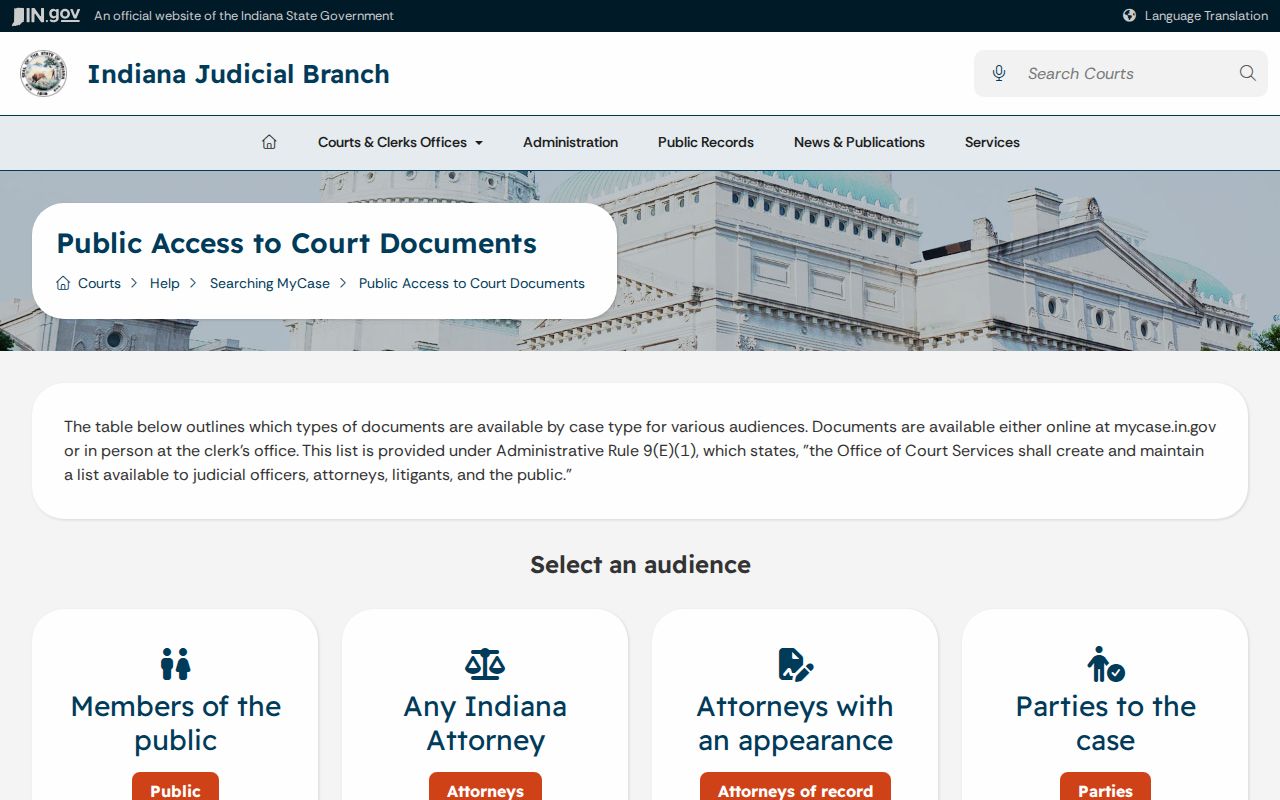
The header, the CCS entry, and the filed PDF are three separate access questions. The clerk keeps the official record. A certified judgment stands apart from a free search. The clerk posts no local fee list or turnaround, so call 765-825-1813 before sending payment or private information.
Fayette Clerk Civil Record Fallback
No online hit does not mean the case is gone. First, double-check the spelling, the court, the category, the status, and the date range. Strip hyphens and leading zeroes from the cause number and search again. A number can change when a case transfers, so a party-name search may surface the current file. Still nothing? Call the court that likely owns it. In Fayette County, Circuit Court handles general civil, family, probate, guardianship, and related categories. Superior Court takes general civil, collection, small claims, eviction, and the other categories shown in the county and state statistics.
Find the Fayette County Clerk at the courthouse. The office sits at the north end of the second floor, 401 N Central Ave, Connersville, Indiana 47331. Phone 765-825-1813, fax 765-827-4902, email clerk@co.fayette.in.us. Hours shift by day, close from noon to one for lunch, and end at 12:30 p.m. Thursday. Call ahead, especially for a certified copy or an older paper file.
Make your request count. Name the exact court, the cause number, each party's role, the filing or event, and a date range. Ask whether the item is public. Ask whether you can inspect it in person, whether you need a plain or certified copy, what the fee is, and which request and payment channels the office accepts. The county publishes no general civil copy form, no guaranteed turnaround, no mail workflow, no drop-box instruction, and no public-terminal inventory.
One caution about money figures. Financial fields in MyCase are informational only. Need an agreed judgment, default judgment, dismissal, garnishment, judgment transcript, or an official balance? Request the complete event and the signed record. The county forms index lists several of these civil products, but a form listed there does not prove it was filed in any particular case. Only the CCS and the clerk file establish that.